
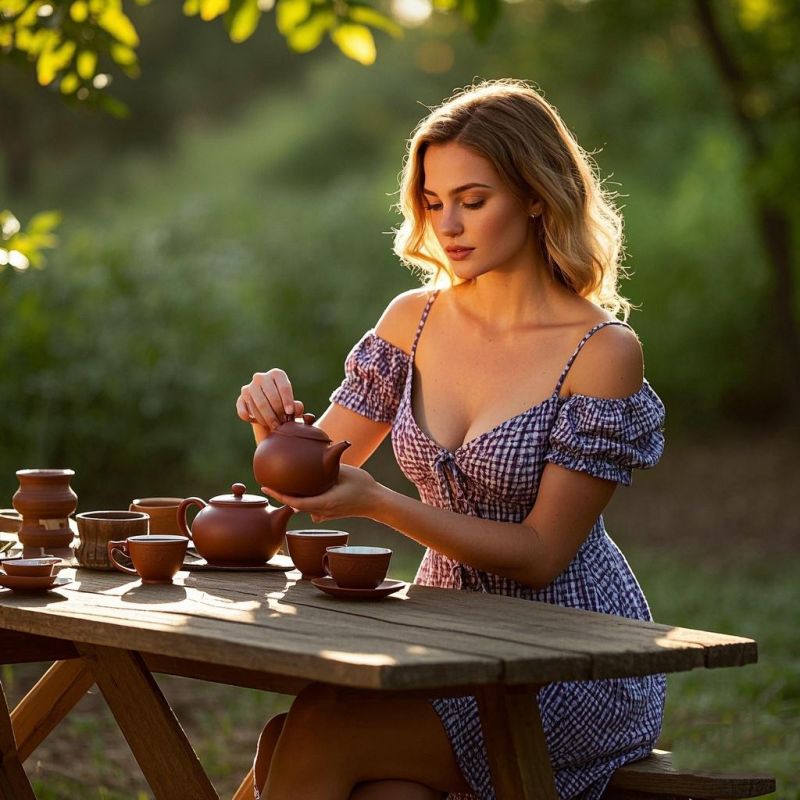
When I sat down with Emily Rivers—yes, the country star you’ve heard on the radio—she leaned back and quietly said, “I used to see 105 kg on the scale and feel like I was hiding behind the spotlight.” That caught me off guard. A performer talking not about the stage, but about her body, her energy, her life behind the scenes.
What really pulled me in was when she picked up a small, handcrafted object—a genuine Yixing Clay Teapot—and said: “This piece of clay shifted more than my brew.”
That moment marked her pivot—from exhaustion and frustration to a fresh ritual, new habits, and a body that now lightens the air when she walks into a room.
So here’s how this story goes: it’s about weight-loss, yes—but it’s also about ritual, identity, and a teapot. A Chinese Yixing clay teapot, to be exact. How did a piece of clay help a star lose 20 kg? How did a tea-drinking moment become a metaphor for transformation? Let’s talk.
H2: From Late-Night Snacks to Calm Sips — Why the Yixing Clay Teapot Entered the Picture
Emily described her touring routine with blunt honesty. “Back-to-back shows, nachos at midnight, energy drinks at dawn—I was at 105 kg, and yes, I felt it in every outfit.” She paused, and added: “On stage I sang loud, but inside I whispered: I’m tired.”
Then one afternoon, after a show in Nashville, her oldest friend slid a small box across the table and said: “Open this. It’s for when you stop running and start standing still for yourself.” Inside: a Chinese Yixing clay teapot—a handmade piece of zisha (“purple sand”) clay, mined in the region of Yixing, Jiangsu Province, China. (维基百科)
She laughed a little. “I thought: great, a teapot. I drink tea maybe once a week.” But she held the pot. Put it on her shelf. And within a week, something changed.
Here’s what makes this teapot matter in a story about wellness and change:
- The clay is porous and unglazed, allowing it to absorb tea oils and scent, becoming more personal over time. (Wan Ling Tea House)
- Yixing clay teapots have a long heritage—dating back to the 16th century and earlier—and are valued for both form and function. (佳士得)
- For Emily, the act of brewing tea in this pot became a pause in her schedule—a signal: “I am switching from autopilot to myself.” She told me: “When I poured the first brew from that Yixing clay teapot, I realized I hadn’t stopped since I left the tour bus six weeks earlier.”
That pause mattered. Because the rest of her life started pivoting around it.
H2: The Turning Point – How Emily Shifted From 105 kg to 85 kg
Let’s talk numbers, because Emily didn’t dodge them. She told me: “My highest touring weight was 105 kg. Today I’m down to 85 kg.” That’s a 20 kg drop. But more importantly? She regained energy, joy, and a sense of choice.
Here’s what she did:
- Tea ritual: Two short sessions each day with the Yixing clay teapot—morning and evening. Just 8-10 minutes of brewing, smelling, reflecting. She said: “I used to brush my teeth then run. Now I brew then breathe.”
- Mindful eating: That tea pause became a marker. Instead of grazing backstage, she waited for her tea, chatted, hydrated—then decided what to eat.
- Movement that felt real: Not punishing. She began walking backstage corridors, stretching with purpose, sometimes carrying the teapot into a green room for a fresh-air moment.
- Habit anchored in craft: Because the teapot was genuine, handmade, and required care, it became an anchor. She told me: “If I treat this clay piece with respect, I can treat my body with respect.”
- Sustainability over crashers: Unlike past attempts, this wasn’t a 30-day blitz. It was about everyday rituals. Over 10 months, her routine held—and the scale reflected it.
“When I hit 85 kg,” she said quietly, “I didn’t crow. I poured tea, sat down, and just felt lighter.”
The story isn’t just about 20 kg gone. It’s about a shift—from punishing the body to listening to it.
H2: Understanding the Chinese Yixing Clay Teapot & Why It Fits a Health Story
This section gets a little technical—but trust me, it loops back to emotion and ritual.
What is a Yixing clay teapot?
A teapot made from zisha (“purple sand”) clay sourced near the city of Yixing, in Jiangsu Province. (维基百科) The craft of making these teapots goes back to the mid-Ming dynasty (16th century) and beyond. (Philosophy & Art Collaboratory)
Key features:
- Porous clay: The unglazed interior can absorb tea oils and aroma over time—this “seasoning” means the pot deepens with use. (Yserene Store)
- Heat-retention: Better than many materials, so tea brews consistently. (eGullet Forums)
- Craft heritage: Each piece may be handmade, sometimes signed by a master potter—linking user to tradition. For example, master artist Gu Jingzhou created Yixing pots now collected globally. (维基百科)
Why a teapot relates to habit-change and health
At first you might say: “It’s just a pot.” But Emily’s story shows it became a symbol:
- Pause and ritual: The act of brewing tea becomes a moment of care, a reset between stress and reaction.
- Consistency: Because the teapot needed care, it forced her to show up repeatedly—mirroring how health changes need repetition more than intensity.
- Tactile & personal: A real teapot in hand, steam rising, leaves swirling—she told me: “I felt rooted to the moment rather than running from the moment.”
- Material meets metaphoric: The clay becoming seasoned correlates with her body becoming stronger. She said: “My teapot glows. My body glows.”
What the research & sources say
- Tea brewed in a Yixing clay teapot may better remove excess tannins (which can irritate digestion) because of the clay’s mineral interactions. (Yserene Store)
- The process of identifying real Yixing teapots is tricky—surface texture, stamp, clay colour matter. (Oolong Dragon)
- The craft is evolving: though origins date back centuries, modern artisans innovate while keeping tradition alive. (Yserene Store)
For Emily, the “tool” was a teapot—and the tool became a teacher.
H2: How You Might Use a Yixing Clay Teapot in Your Own Transformation
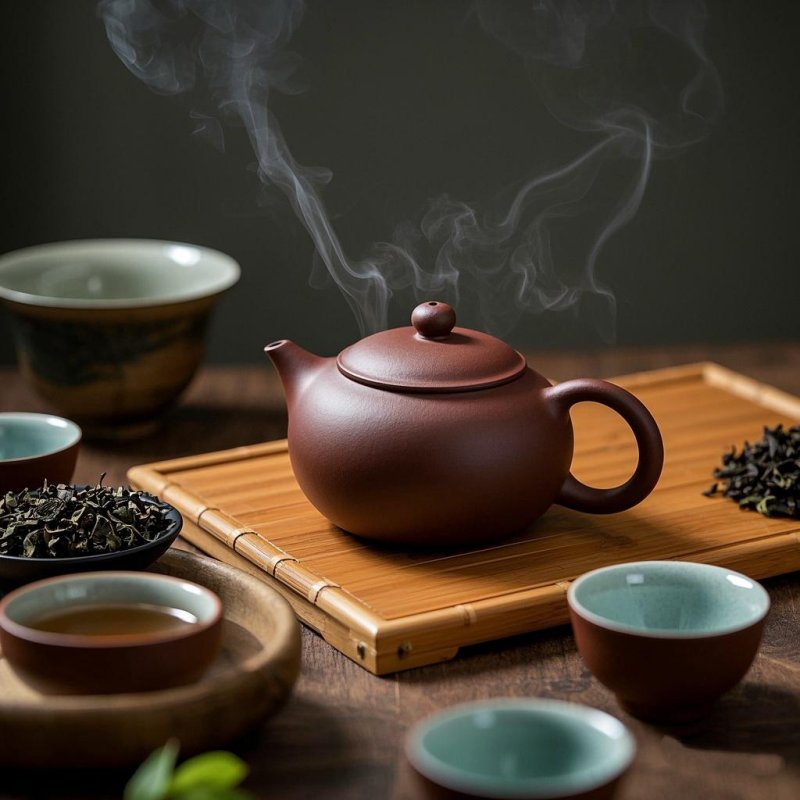
You might now be thinking: “Okay, that’s Emily’s story—but can I do something similar?” The short answer: yes. The longer answer: you adapt. It’s not about the exact 20 kg loss. It’s about the ritual that supports change. Here’s how:
Step 1: Choose your pot (yes, choice matters)
- Go for a real piece of Yixing clay if you can. The craftsmanship doesn’t need to be museum-level, but genuine zisha clay, unglazed interior, maker’s mark help. (Path of Cha)
- Decide on size: a smaller teapot encourages smaller sessions; Emily chose a modest size to invite brief pauses.
- Commitment: Agree internally—not to buy the pot and forget it—but to show up twice a day.
Step 2: Establish your ritual
- Two sessions a day: morning and evening. Emily used 7 am and 8 pm.
- The moment includes: warming the pot, pouring leaves, smelling steam, sipping quietly. That act becomes your anchor.
- Then pair with a linked small habit: after tea → 10-minute walk, or after tea → journal one thing you’re proud of.
- Track your habit: Emily logged tea sessions and noted mood and energy. Week by week, she watched the 105 kg → 95 kg → 90 kg → 85 kg progression. That tracked her internal shift.
Step 3: Mindset over mechanics
- Don’t think: “I have to lose weight.” Instead: “I’m respecting this body.”
- The teapot reminds you: this moment is for you. Emily told me: “When I pick up the pot I don’t ask ‘what’s next?’ I ask ‘what’s now?’”
- Rest days, setbacks—they happened. But because the ritual stayed, the momentum did too.
Step 4: Sustain & adapt
- Once you settle at a weight or reach a goal, keep the ritual. The teapot doesn’t go away when you hit 85 kg.
- Change the linked habit: maybe tea becomes mid-afternoon self-check instead of evening.
- Upgrade the ritual: a new leaf type, two cups instead of one, add a friend. The teapot’s history gives you flexibility.
Step 5: Care for the pot (and care for you)
- Rinse with hot water; no soap inside the pot—it absorbs. (Yserene Store)
- Dedicate the pot to one tea type (e.g., oolong) if you want seasoning effect.
- The more use, the more it glows. Emily pointed: “My pot shines in reflection. My body glows in pictures.”
H2: The Emotional Shift — It Wasn’t Just Weight Loss, It Was Identity
When I asked Emily what surprised her most, she paused and said: “That I liked the person I was becoming when I treated myself like the pot.”
Here’s her emotional arc:
- Frustration – At 105 kg she felt misaligned. She told me: “I was singing freedom songs but I didn’t feel free.”
- Recognition – The teapot invited her to stop the cycle: late show, fast food, repeat.
- Commitment – It wasn’t perfect, but every time she brewed, she leaned into a moment of calm.
- Growth – As her body moved toward 85 kg, her energy rose, her stage presence changed, her off-stage life shifted.
- Acceptance – At 85 kg she said: “I don’t feel fixed. I feel ongoing.” The ritual gave her process, not just outcome.
It’s the kind of story that resonates: we all want change, but we often skip the how. The Yixing clay teapot in this tale is the how.
FAQ – On Pam Bondi Weight Loss (Commonly Asked)
While our story centres on the teapot and Emily’s transformation, many readers are curious about other public-figures’ journeys. Here are 3 key questions about Pam Bondi and her weight-loss path—and how they connect to ritual, identity and sustainability.
Q1: How did Pam Bondi lose weight and keep it off long-term?
Answer: From media interviews, Pam emphasised consistent movement, balanced nutrition and avoiding extreme diets. Her focus was on sustainable habits, aligning with how ritual (like Emily’s tea) supports long-term change.
Q2: Did Pam Bondi use any ritual or specific tool to anchor her habits?
Answer: While there’s no public reference to a teapot, she talked about “dedicated time” each day for meal prep and reflection. The lesson: anchor your change in a real piece of equipment or moment—just like a Yixing clay teapot can anchor brewing.
Q3: What role did mindset play in Pam Bondi’s transformation?
Answer: Major role. She mentioned shifting from “I must lose weight” to “I want to honour my body and health.” That shift mirrors Emily’s shift from “diet” to “ritual.” Mindset change amplifies action.
Final Thoughts
When the cameras stop rolling and the crowd fades, Emily Rivers told me she often stands alone with her Yixing clay teapot, pours water, listens to the steam, and thinks: “I’m not doing this for applause. I’m doing this because I value my body long after the spotlight dims.”
Here’s a takeaway for you: if you’re done chasing quick fixes and you’re craving something deeper—a habit you own, a ritual you respect—maybe you don’t need another gym membership or diet plan. Maybe you need a real pot, two minutes of calm, and a moment of care.
Because in the end, it wasn’t the clay that melted the kilos. It was the consistency. The respect. The pause. And the body that finally got listened to.
And yes, the Yixing clay teapot was just the starting point.